What is the difference between a bison, a buffalo, and a yak?
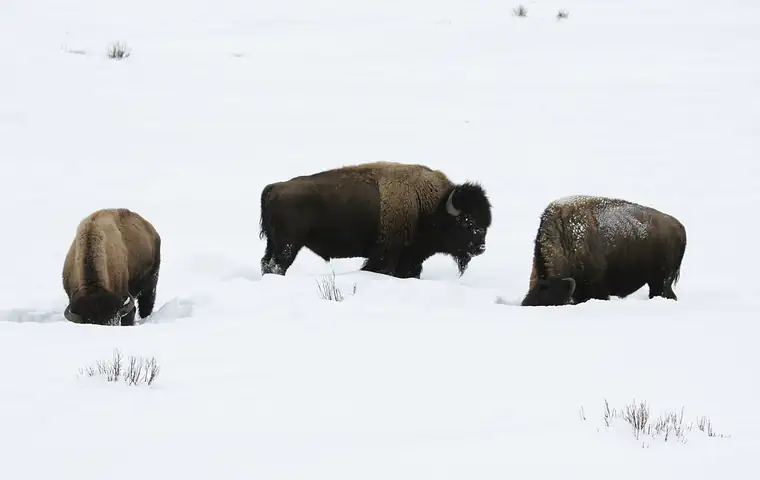
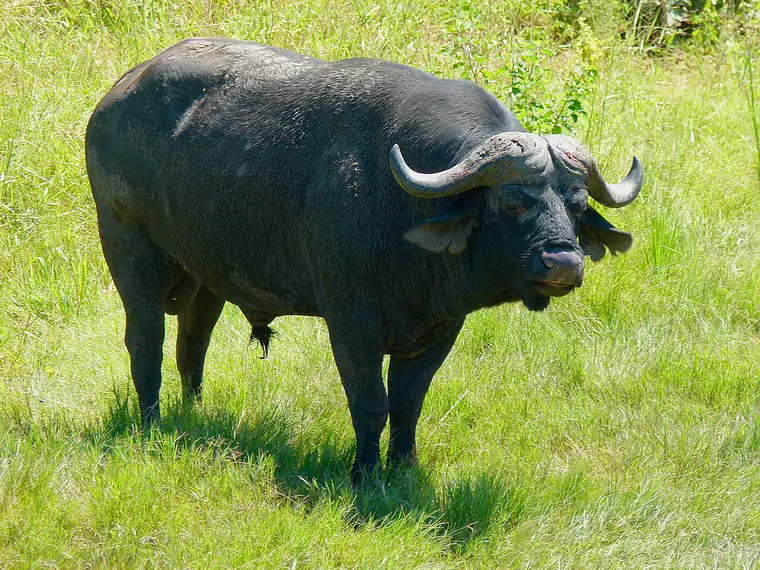
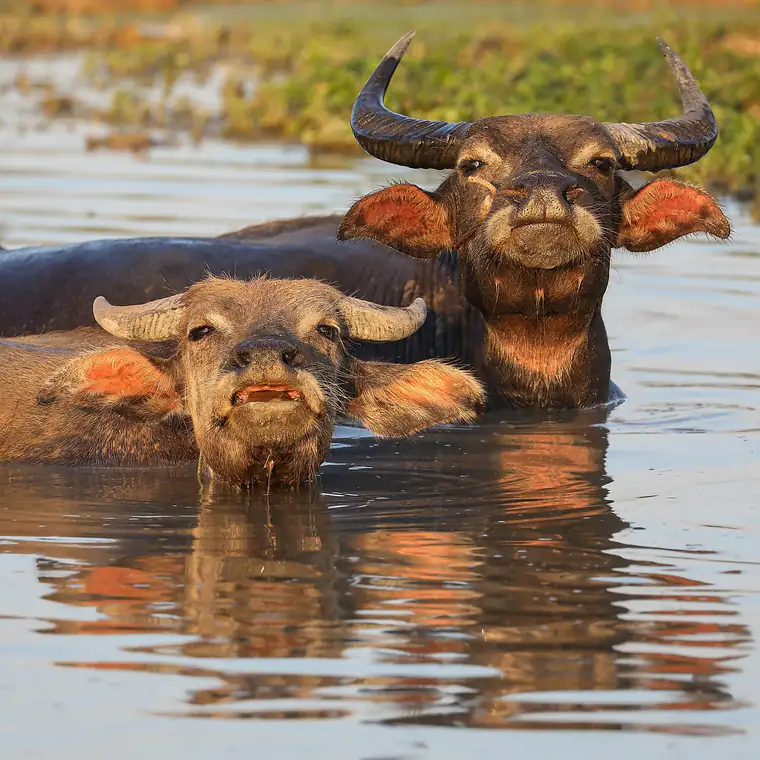
They are four animals in four genera. The American bison (Bison bison) is a North American grassland bovid. True buffalo are two separate animals, the African cape buffalo (Syncerus caffer) and the Asian water buffalo (Bubalus bubalis), in different genera again. The yak (Bos mutus wild, Bos grunniens domestic) is a Tibetan Plateau bovid in the genus Bos, alongside cattle. The key point most people miss: the bison and the yak are not buffalo at all. The word "buffalo" correctly applies only to the cape buffalo and the water buffalo.
Four-way comparison
| Trait | American bison | Cape buffalo | Water buffalo | Yak |
|---|---|---|---|---|
| Genus | Bison | Syncerus | Bubalus | Bos |
| Scientific name | Bison bison | Syncerus caffer | Bubalus bubalis (domestic), Bubalus arnee (wild) | Bos grunniens (domestic), Bos mutus (wild) |
| Native continent | North America | Africa | Asia | Asia (Tibetan Plateau) |
| Bull weight | 700-900 kg (up to ~1,000) | 500-900 kg | 700-1,200 kg (wild) | 800-1,200 kg (wild); 300-500 kg (domestic) |
| Shoulder height (bull) | 1.6-1.85 m | 1.4-1.5 m | 1.5-1.9 m | 1.6-2.05 m (wild) |
| Signature horns | Short curved horns, both sexes | Fused boss across the forehead | Widest sweep of any bovid (record 4.24 m) | Long forward-curving horns |
| Distinctive feature | Shoulder hump and beard | Herd-defensive, one of Africa's Big Five | Water-loving, wallowing browser | Ground-length coat skirt, altitude specialist |
| Domesticated? | No (ranched, not domesticated) | No, never | Yes, 200 million+ (FAOSTAT) | Yes, ~14-15 million |
| IUCN Red List status | Near Threatened | Near Threatened | Endangered (wild Bubalus arnee) | Vulnerable (wild Bos mutus) |
The naming trap: only two of these are buffalo
The single most useful thing to know about this group is that "buffalo" is not a catch-all for large wild cattle. It names two specific animals: the cape buffalo of sub-Saharan Africa and the water buffalo of South and Southeast Asia. The American bison was called "buffalo" by early European settlers, and the name stuck in common North American usage, but the bison sits in its own genus and is not a buffalo in the zoological sense. The yak is a third case again, a member of the genus Bos alongside domestic cattle, and it is not a buffalo either.
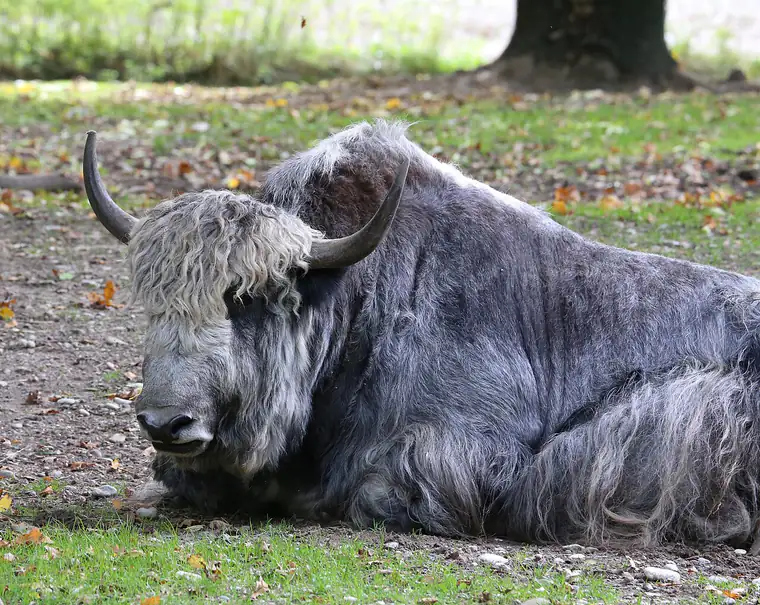
The anatomical tells line up with the taxonomy. A bison carries a pronounced shoulder hump built on tall thoracic vertebrae and a heavy beard hanging from the chin and throat. Cape and water buffalo have neither the hump nor the beard. The yak has a modest hump that is mostly a mound of fur over the shoulders, plus its unmistakable curtain of long hair, the coat skirt, that hangs almost to the ground. Once you know the hump-and-beard signature, the bison is easy to separate from the two true buffalo.
Which is the biggest?
On peak weight the honours go to the two Asian wild animals. A wild water buffalo bull (Bubalus arnee) and a wild yak bull (Bos mutus) both reach about 1,200 kg. A large American bison bull weighs 700 to 900 kg with exceptional and wood bison bulls reaching about 1,000 kg or more, and a large cape buffalo bull reaches about 900 kg. So the wild water buffalo and wild yak just edge ahead of the bison and the cape buffalo, though all four heavyweight bulls sit in the same broad band.
The domestic forms change the picture. Domestic yak (Bos grunniens) are much smaller, at 300 to 500 kg for a bull, so a bison dwarfs a domestic yak even though a wild yak outweighs the bison. Domestic water buffalo vary widely by breed but the large river breeds are heavy, comparable to or heavier than a bison. Height tells a different story from weight: the wild yak is the tallest at the shoulder, up to about 2.05 m, with the water buffalo and bison next and the cape buffalo the shortest of the four at roughly 1.4 to 1.5 m.
Geography: three continents, no overlap
These four animals evolved apart and never met in the wild. The American bison ranged the grasslands and boreal forests of North America. The cape buffalo occupies the savannas, floodplains, and forests of sub-Saharan Africa. The water buffalo is native to the wetland margins and grasslands of South and Southeast Asia. The yak is an altitude specialist of the Tibetan Plateau and its bordering ranges, the highest-living large mammal on Earth. Any resemblance between them is convergent evolution toward a large, cold- or heat-tolerant grazing body plan, not close kinship.
Domestication: only two of the four
Two of these animals have been domesticated and two have not. The water buffalo carries by far the largest domestic population, over 200 million head according to FAOSTAT, sustaining dairy and draft economies across Asia and beyond, domesticated at least 3,000 years ago. The yak was domesticated on the Tibetan Plateau roughly 5,000 years ago and its domestic population is about 14 to 15 million. The American bison has never been fully domesticated; commercial ranching manages it as livestock but the animal keeps its wild genome and behaviour. The cape buffalo has never been domesticated at all, its temperament being one of the reasons Africa never developed a native draft bovid from it.
Conservation status
All four wild forms are under pressure, at different levels on the IUCN Red List. The American bison and the cape buffalo are both listed Near Threatened; the bison survives mostly as commercial ranch stock with a smaller conservation core, and the cape buffalo numbers around 400,000 with a declining trend. The wild yak (Bos mutus) is listed Vulnerable, with fewer than 10,000 mature individuals on the Tibetan Plateau. The wild water buffalo (Bubalus arnee) is the most threatened of the four, listed Endangered with fewer than 4,000 remaining, its wild genome eroding through hybridisation with the vast domestic population.