Home / Where to See Them

Where to See Bison and Buffalo in the Wild: A Destination Guide

Practical travel information for seeing American bison, cape buffalo, and wild water buffalo. Best parks, viewing seasons, entry fees, and access logistics. Prices are in local currency and USD equivalents where known; verify current fees before travel.

Affiliate disclosure: This page does not use affiliate links. All recommendations are based on ecological significance and wildlife viewing quality only. Safari booking and park passes should be purchased directly from official sources or reputable licensed operators.

American Bison

Yellowstone National Park, Wyoming/Montana/Idaho

Population: ~4,900 bison (2023 estimate)

Best season:
Year-round. Spring (April-May) for calves. Autumn (September-October) for the rut.
Best spots:
Lamar Valley (best wildlife density), Hayden Valley, Gibbon Meadows
Practical notes:
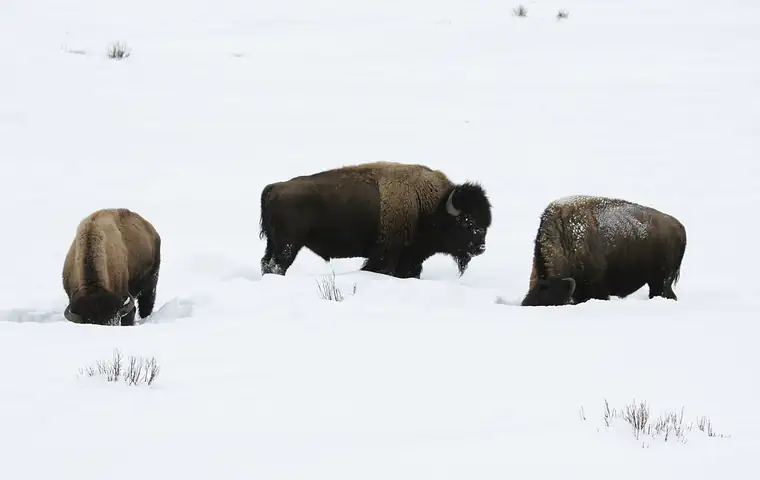
No booking required to enter the park for wildlife viewing. Bison are frequently seen from the road; exits are common traffic hazards (bison cause more tourist injuries than bears at Yellowstone). Minimum safe approach distance: 25 yards (23 metres) per NPS rules.
Access:
Nearest airports: Jackson Hole (JAC), Bozeman (BZN). Annual park pass $35.

Custer State Park, South Dakota

Population: ~1,300 bison

Best season:
Year-round. Autumn roundup (late September-early October) is a major event.
Best spots:
Wildlife Loop Road (18-mile drive). Bison frequently block the road.
Practical notes:
Annual Buffalo Roundup in late September: NPS rangers and volunteers on horseback herd the entire bison population for vaccination and culling. Open to viewing spectators. One of the largest remaining bison herds in the US.
Access:
Nearest airport: Rapid City (RAP). Park fee ~$20/vehicle/day.

Wood Buffalo National Park, Alberta/NWT, Canada

Population: ~5,000 bison (largest free-roaming herd in North America, including plains-wood bison hybrids and a small pure wood bison population)

Best season:
July-September for road access. Parts of the park are accessible by air only.
Best spots:
Salt Plains area; bison are frequently seen along Highway 5 within the park.
Practical notes:
UNESCO World Heritage Site. The park is remote; Fort Smith (NWT) is the main gateway. No public services within the park. Self-drive wildlife viewing on gravel roads; bison herds of 20-50 common.
Access:
Fort Smith Airport (FSM). Park admission C$10/day.

Cape Buffalo

Kruger National Park, South Africa

Population: ~37,000 cape buffalo (2019 estimate, though populations fluctuate with bovine tuberculosis)

Best season:
Dry season (May-September). Animals concentrate at waterholes, making viewing easier.
Best spots:
Crocodile Bridge area, Satara, Shingwedzi
Practical notes:
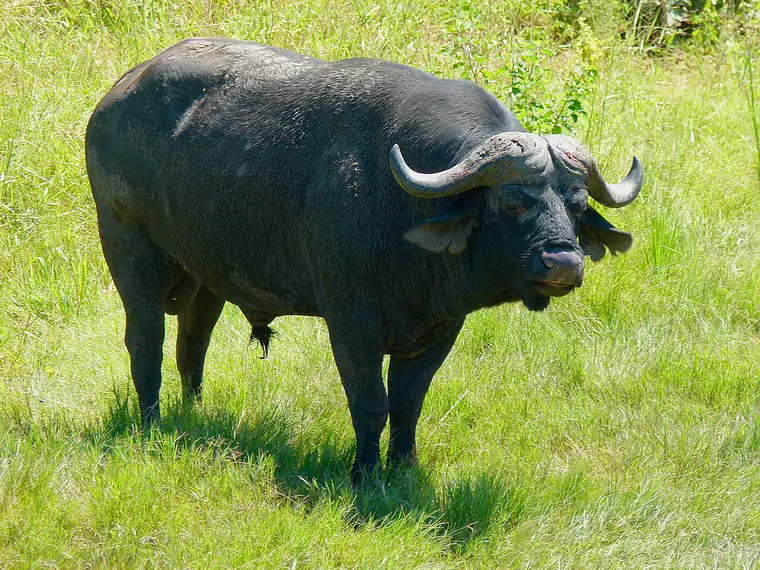
Excellent self-drive infrastructure with tar roads, rest camps, and filling stations. Cape buffalo are common; large herds of 100-500 animals frequently block roads. Note: bovine tuberculosis has severely affected the Kruger population since the 1990s; the southern Kruger herds are the most affected.
Access:
Nearest airport: Hoedspruit (HDS) or Johannesburg (JNB). Day visitor fees R440 per person per day (2024). Overnight accommodation bookable through SANParks.
Serengeti National Park, Tanzania

Population: ~70,000-80,000 cape buffalo (part of the Serengeti-Masai Mara ecosystem)

Best season:
Year-round. Dry season (June-October) for best game viewing. Buffalo commonly seen in large herds during the Serengeti's dry-season concentrations.
Best spots:
Central Serengeti (Seronera area), Northern Serengeti
Practical notes:
Higher cost than South Africa; typically accessed via guided safari. No self-drive. Entry fees: $70 per person per 24 hours (2024). Budget $350-600+ per person per day for mid-range guided camp accommodation.
Access:
Nearest airports: Seronera airstrip (charter flights) or Kilimanjaro International (JRO).

Masai Mara National Reserve, Kenya

Population: Part of the wider Serengeti ecosystem; tens of thousands of buffalo present

Best season:
Year-round. July-October for the wildebeest migration crossings, during which large buffalo herds also concentrate.
Best spots:
Mara River crossings, Musiara Marsh area
Practical notes:
Premium destination with high camp costs. Entry fee: Ksh 200 per adult per day for the main Masai Mara NR; several private conservancies around the reserve charge separately. Guided game drives mandatory.
Access:
Nearest airports: Mara Serena (MRE, charter) or Nairobi JKIA (NBO).

Water Buffalo (Wild)

Kaziranga National Park, Assam, India

Population: Approx. 1,700-2,000 wild/hybrid water buffalo (largest single population globally)

Best season:
November-April (park closed May-October during monsoon). Best from February-April.
Best spots:
Elephant back safaris into the tall elephant grass of the floodplain (the only way to access core areas); jeep safaris on the park periphery.
Practical notes:
UNESCO World Heritage Site. Also home to two-thirds of the world's greater one-horned rhinoceros population, making it a dual flagship species destination. Elephant safaris are early morning departures (5:30am). Jeep safari entry fee approx. 1,500 INR per vehicle. Full-day package: 3,000-5,000 INR. Genetic distinction between truly wild buffalo and hybrids with feral domestic buffalo is an active research question; most buffalo seen are of uncertain genetic status.
Access:
Nearest airports: Jorhat (JRH) or Guwahati (GAU). The park is ~215 km from Guwahati.

Koshi Tappu Wildlife Reserve, Nepal

Population: Small population of approximately 400-500 animals, considered relatively genetically intact

Best season:
October-April (avoid monsoon June-September).
Best spots:
Koshi River floodplains; boat safaris on the Sapta Koshi.
Practical notes:
The reserve also hosts over 500 bird species and is a major migratory bird staging ground, making it of interest to birdwatchers. Less infrastructure than Kaziranga but more intimate and affordable. Entry fee approx. NPR 1,500 per person.
Access:
Nearest airport: Biratnagar (BIR), ~30 km from the reserve. Also accessible from Kathmandu by road (9-11 hours).

Safety Notes for Wildlife Viewing

All three species are capable of injuring or killing humans. The following rules apply universally:

  • Bison at Yellowstone: The NPS minimum distance is 25 yards (23 metres). Bison are responsible for more visitor injuries at Yellowstone than bears, wolves, and elk combined. They charge with little warning and can outrun a human. Never position yourself between a cow and her calf.
  • Cape buffalo on safari: Always stay in your vehicle unless your guide explicitly approves a walking activity. Never approach lone old bulls ("dagga boys") on foot. Wounded animals are extremely dangerous.
  • Wild water buffalo: Few visitors will encounter truly wild water buffalo outside of managed park settings. In Kaziranga, elephant back safaris provide safe elevation. Always follow guide instructions without question.

Continue reading