How much does a buffalo weigh?
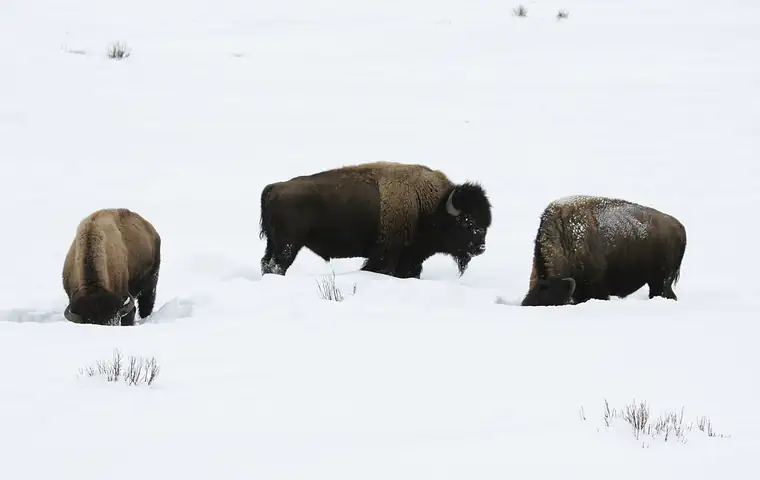
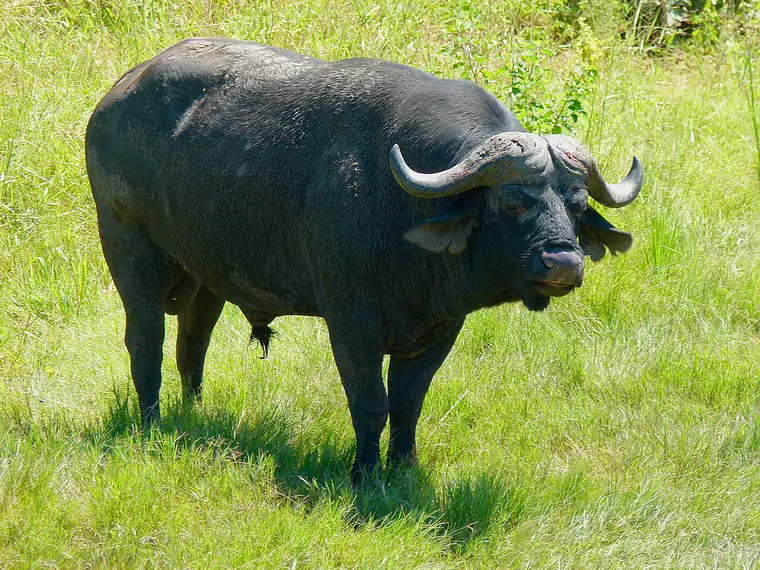
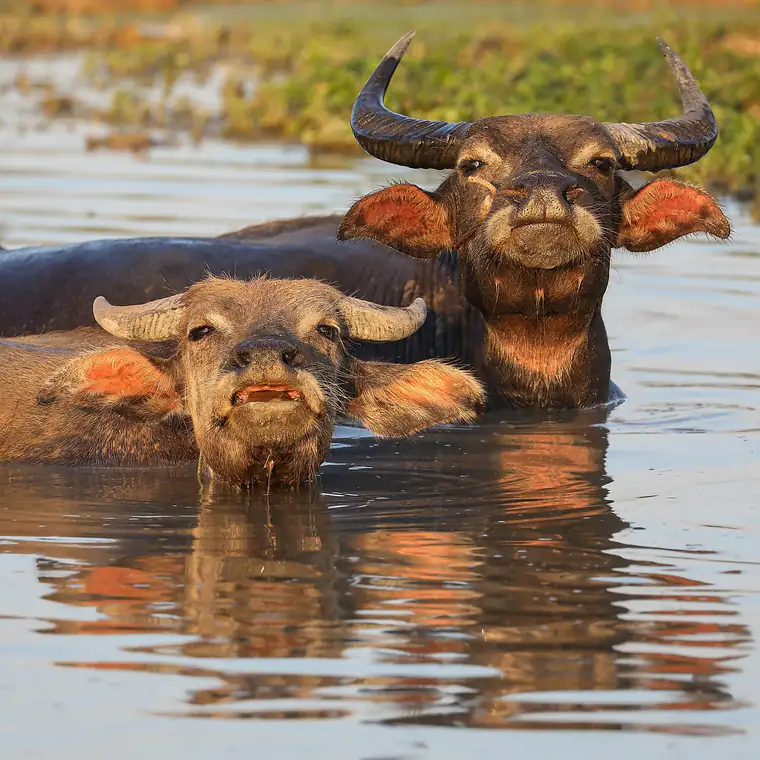
It depends which buffalo, because the word covers three different animals. An African cape buffalo bull weighs 500 to 900 kg (1,100 to 2,000 lb). A wild Asian water buffalo bull is the heaviest of the three, at 700 to 1,200 kg (1,540 to 2,640 lb). The American bison, commonly called an American buffalo, has bulls that typically weigh 700 to 900 kg (1,540 to 2,000 lb), reaching about 1,000 kg in exceptional and wood bison animals, and cows of 360 to 544 kg (790 to 1,200 lb). So a large adult "buffalo" of any of the three weighs roughly 700 to 1,200 kg, and the wild water buffalo is the heaviest. The full data table below breaks down every measurement by species and sex.
Full Measurement Comparison
Data sourced from IUCN Red List species assessments, Nowak (1999) "Walker's Mammals of the World", and peer-reviewed wildlife biology literature. Water buffalo figures are for wild subspecies; domestic water buffalo are typically 20-30% smaller.
| Measurement | American Bison | Cape Buffalo | Water Buffalo (wild) | |||
|---|---|---|---|---|---|---|
| Bull (male) | Cow (female) | Bull (male) | Cow (female) | Bull (male) | Cow (female) | |
| Shoulder height | 170-200 cm (67-79 in) | 152-180 cm (60-71 in) | 140-150 cm (55-59 in) | 120-140 cm (47-55 in) | 150-190 cm (59-75 in) | 130-160 cm (51-63 in) |
| Body length | 210-380 cm (83-150 in) | 180-280 cm (71-110 in) | 170-340 cm (67-134 in) | 150-260 cm (59-102 in) | 240-300 cm (94-118 in) | 200-240 cm (79-94 in) |
| Weight | 630-1,000 kg (1,390-2,200 lb) | 360-544 kg (790-1,200 lb) | 500-900 kg (1,100-2,000 lb) | 300-500 kg (660-1,100 lb) | 700-1,200 kg (1,540-2,640 lb) | 400-700 kg (880-1,540 lb) |
| Horn length (outer curve) | 40-60 cm (16-24 in) | 30-50 cm (12-20 in) | 100-160 cm (39-63 in) | 60-100 cm (24-39 in) | 150-200+ cm (59-79+ in) | 80-130 cm (31-51 in) |
| Horn span (tip to tip) | 50-80 cm (20-31 in) | 40-65 cm (16-26 in) | 100-160 cm (39-63 in) | 50-90 cm (20-35 in) | 100-200 cm (39-79 in) | 70-130 cm (28-51 in) |
| Top speed | 55-60 km/h (34-37 mph) | 50-55 km/h (31-34 mph) | 55-60 km/h (34-37 mph) | 50-55 km/h (31-34 mph) | 40-48 km/h (25-30 mph) | 35-45 km/h (22-28 mph) |
| Gestation period | - | ~285 days (9.5 months) | - | ~340 days (11 months) | - | ~300-340 days (10-11 months) |
| Birth weight (calf) | 14-20 kg (31-44 lb) | 14-20 kg (31-44 lb) | 30-50 kg (66-110 lb) | 30-50 kg (66-110 lb) | 35-45 kg (77-99 lb) | 35-45 kg (77-99 lb) |
| Lifespan (wild) | 15-20 years | 15-20 years | 15-22 years | 15-25 years | 20-25 years | 20-25 years |
Which Is the Largest?
The question of which species is "largest" depends on the metric:
- Heaviest typical male: Wild water buffalo, at up to 1,200 kg for exceptional bulls (average large male 900-1,000 kg). American bison bulls average 700-900 kg; large cape buffalo bulls average 700-850 kg.
- Tallest at the shoulder (excluding hump): Water buffalo, at up to 190 cm. However, bison bulls are taller including the hump: the hump can add 20-30 cm of height above the shoulder blade.
- Longest horns: Wild water buffalo, by a considerable margin. The world record wild water buffalo horn measured 4.24 metres along the outer curve. Cape buffalo horns are shorter but much more massive (the fused boss adds significant bone mass). Bison have the shortest horns of the three.
- Fastest: Bison and cape buffalo are closely matched at 55-60 km/h. Water buffalo are somewhat slower at 40-48 km/h.
Size Notes and Caveats
All measurement ranges represent typical populations based on systematic wildlife surveys. Trophy record animals (as recorded by Rowland Ward or Safari Club International for cape buffalo; by various state wildlife agencies for bison) frequently exceed the upper end of typical ranges.
Cape buffalo size also varies significantly by subspecies: the forest buffalo (Syncerus caffer nanus) found in Central and West Africa weighs only 160-320 kg, roughly one-third the mass of the nominate cape buffalo subspecies. The table above reflects the nominate cape buffalo of eastern and southern Africa.
Domestic water buffalo are notably smaller than wild buffalo of the same subspecies. Selective breeding and different nutritional environments have reduced average body size; most domestic river buffalo bulls weigh 450-600 kg rather than the 700-900 kg of wild males.
American plains bison and wood bison differ slightly: wood bison bulls are on average 100-180 kg heavier than plains bison bulls of the same age and condition, and stand taller with a more angular hump profile.
Are moose or bison bigger?
The bison and the moose are the two heaviest land mammals in North America, and this is the most-asked size comparison for either animal. Both answers are true at once. By weight the bison is bigger; by shoulder height the moose is bigger. An average bull bison outweighs an average bull moose, and the heaviest bison far exceed the heaviest moose, while the moose stands 15 to 25 cm taller at the shoulder and carries its head and antlers a full metre higher again.
| Measurement | American bison (bull) | Moose (bull) |
|---|---|---|
| Weight | 700-900 kg (peak ~1,000+) | Up to ~725 kg / 1,600 lb (large Alaska-Yukon bulls, ADF&G) |
| Shoulder height | 1.6-1.85 m | 1.8-2.1 m |
| Head ornament | Horns (permanent, both sexes) | Antlers (annual, bulls only) |
Full breakdown, including the largest-land-mammal question and antlers vs horns: Bison vs moose compared.
Frequently asked questions
How much does a buffalo weigh?
It depends which buffalo. The word covers three animals. An African cape buffalo bull weighs 500 to 900 kg (1,100 to 2,000 lb). A wild Asian water buffalo bull is the heaviest, at 700 to 1,200 kg (1,540 to 2,640 lb). The American bison, often called an American buffalo, has bulls that typically weigh 700 to 900 kg (1,540 to 2,000 lb), with exceptional and wood bison bulls reaching about 1,000 kg. So a large adult buffalo of any of the three weighs roughly 700 to 1,200 kg, and the wild water buffalo is the heaviest of them.
What is the average weight of an American bison?
An adult bull bison typically weighs 700 to 900 kg (1,540 to 2,000 lb); the National Park Service gives bulls at up to 2,000 lb. Exceptional bulls and the larger wood bison subspecies reach about 1,000 kg (2,200 lb) or more. Cows are much lighter, up to about 1,000 lb (450 kg), though wood bison cows run heavier. Wood bison bulls average roughly 100 to 180 kg heavier than plains bison bulls of the same age.
Which is heavier, a bison or a buffalo?
Among typical animals the wild Asian water buffalo is the heaviest, with bulls reaching 1,200 kg. An American bison bull (700 to 900 kg, exceptionally about 1,000 kg) and a cape buffalo bull (500 to 900 kg) are both lighter on average. So a wild water buffalo outweighs a bison, but a bison outweighs a cape buffalo. Domestic water buffalo, at 300 to 550 kg, are lighter than all three.
How much does a cape buffalo weigh?
A nominate cape buffalo bull weighs 500 to 900 kg (1,100 to 2,000 lb) and a cow 300 to 500 kg (660 to 1,100 lb). The smaller forest buffalo subspecies weighs only 160 to 320 kg, roughly a third of the mass of the eastern and southern African cape buffalo.
How much does a wild water buffalo weigh?
A wild Asian water buffalo (Bubalus arnee) bull weighs 700 to 1,200 kg (1,540 to 2,640 lb) and is the heaviest of the wild buffalo and bison species. Cows weigh 400 to 700 kg. Domestic water buffalo are 20 to 30 percent smaller, with most river-type bulls at 450 to 600 kg.
How tall is a bison compared to a buffalo?
At the shoulder blade, a wild water buffalo bull is tallest at up to 190 cm, followed by the American bison at 170 to 200 cm and the cape buffalo at 140 to 150 cm. But the bison's shoulder hump adds another 20 to 30 cm of height above the shoulder blade, so a bison often looks the tallest of the three in profile.
Are moose or bison bigger?
It depends on the dimension. By weight the bison is bigger: a bull bison typically weighs 700 to 900 kg, exceptional and wood bison bulls about 1,000 kg or more, against a ceiling of about 725 kg (1,600 lb) for large bulls of the Alaska-Yukon moose, the biggest moose race, according to the Alaska Department of Fish and Game. By shoulder height the moose is bigger: a bull moose stands 1.8 to 2.1 m at the shoulder against 1.6 to 1.85 m for a bison, and the moose head and antlers add another metre above that. So the bison is the heavier animal and the moose is the taller animal, and by mass the bison is the largest land mammal in North America.
How does bison size compare to a moose?
A typical bull bison weighs 700 to 900 kg, while large bulls of the Alaska-Yukon moose, the biggest moose race, reach about 725 kg (1,600 lb) according to the Alaska Department of Fish and Game. The heaviest bison, large wood bison bulls at over 1,000 kg, far exceed the heaviest moose. The moose stands taller at the shoulder by 15 to 25 cm. The bison carries permanent horns on both sexes; the bull moose carries antlers that are shed and regrown every year.