Understanding the IUCN Red List Categories
The IUCN Red List uses a standardised set of criteria to assess extinction risk. The relevant categories for bison and buffalo:
- Least Concern (LC): Does not meet any of the criteria for a higher category. Widespread and abundant species.
- Near Threatened (NT): Close to qualifying as Vulnerable or likely to qualify in the near future.
- Vulnerable (VU): At high risk of extinction in the wild if threatening conditions continue.
- Endangered (EN): At very high risk of extinction. Population has declined by at least 50% over 10 years or three generations.
- Critically Endangered (CR): At extremely high risk of extinction.
IUCN assessments are based on quantitative criteria involving population size, rate of decline, geographic range, and probability of extinction modelling. They are updated periodically; the years shown below are the most recent formal reassessment dates.
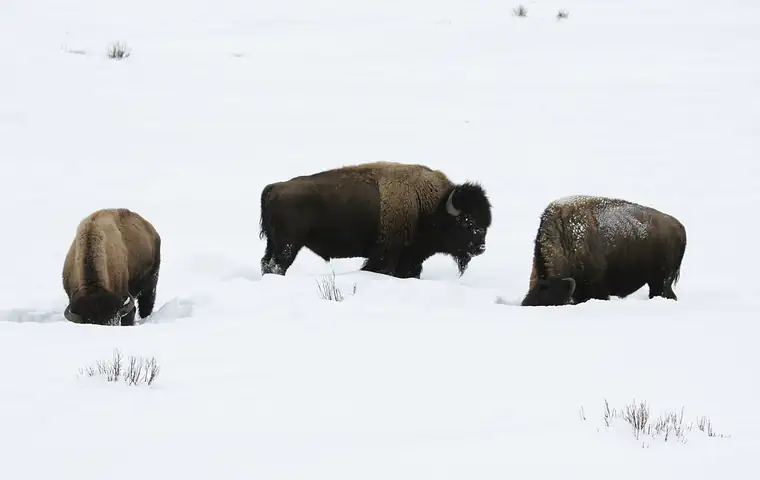
American Bison (Bison bison)
- Population:
- 430,000-530,000 total; ~20,000-30,000 in conservation herds
- Population trend:
- Stable (but conservation-dependent)
- Last assessed:
- 2017
- CITES listing:
- Not listed
Key threats:
- Limited free-ranging space; all large herds are managed within boundaries
- Genetic introgression from domestic cattle in most herds
- Brucellosis transmission at livestock-bison interface
- Lack of ecologically connected large populations
European Wisent (Bison bonasus)
- Population:
- ~9,760 free-ranging in the wild; ~12,200 total worldwide (end 2024)
- Population trend:
- Increasing (from 0 in 1927)
- Last assessed:
- 2020
- CITES listing:
- Appendix III
Key threats:
- Extremely narrow genetic base: all individuals descend from 12 founders
- High inbreeding coefficient leading to reduced immune function
- Small, isolated subpopulations in many reintroduction sites
- Human-wildlife conflict in agricultural zones
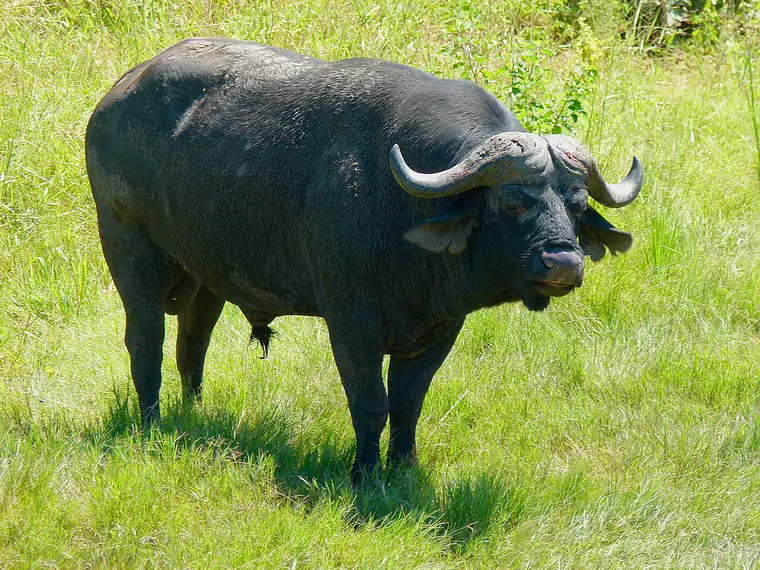
Cape Buffalo (Syncerus caffer)
- Population:
- ~400,000
- Population trend:
- Declining
- Last assessed:
- 2018 (published 2019)
- CITES listing:
- Not listed (S.c. caffer); S.c. nanus listed in CITES Appendix II in some countries
Key threats:
- Bovine tuberculosis (especially in Kruger NP, where >70% of buffalo tested in some zones are positive)
- Foot-and-mouth disease at livestock interface
- Habitat conversion and fragmentation
- Bushmeat hunting (especially forest buffalo subspecies)
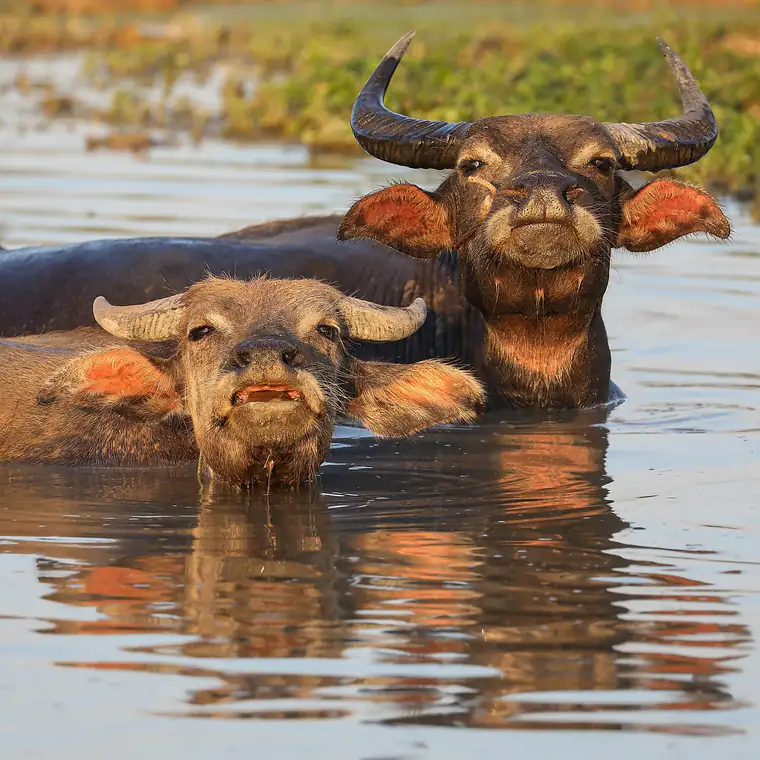
Wild Water Buffalo (Bubalus arnee)
- Population:
- Fewer than 4,000; fewer than 3,400 mature individuals
- Population trend:
- Decreasing
- Last assessed:
- 2019
- CITES listing:
- Appendix III
Key threats:
- Hybridisation with domestic/feral water buffalo (most severe threat)
- Habitat loss: floodplain and alluvial grassland conversion
- Hunting for meat and traditional medicine
- Disease from domestic cattle and buffalo
- Feral domestic buffalo competing for resources and diluting wild gene pool
The Bigger Picture: Habitat Loss and Grassland Decline
Across all four bison and buffalo species, the single most fundamental conservation challenge is not hunting or disease but habitat: the native grasslands, savannas, and alluvial floodplains these species evolved to inhabit are among the most severely converted biomes on Earth.
The North American Great Plains have lost an estimated 70% of native grassland to agriculture, primarily for corn, wheat, and soybean cultivation. The floodplain wetlands and alluvial grasslands of South Asia, where wild water buffalo evolved, have been converted for wet rice cultivation at rates exceeding those of tropical forests. Sub-Saharan African savannas face lower but accelerating conversion pressure.
This means that population numbers, however encouraging, do not tell the full story. Bison populations that exist within fenced parks or management units are not fully functioning ecological participants. Wild water buffalo populations surrounded by domestic animals are not genetically secure. Cape buffalo herds fragmented from each other by agriculture cannot maintain the disease dynamics, predator-prey relationships, and migratory behaviours that characterised their ancestral populations.
CITES and International Trade Regulation
The Convention on International Trade in Endangered Species (CITES) regulates cross-border trade in wildlife. For bison and buffalo:
- American bison: Not listed in CITES Appendices. Bison meat, hides, and live animals can be traded internationally subject to domestic regulations. Canada and the US both have domestic protections for wild bison populations.
- European wisent: Listed in CITES Appendix III by one range state (historically Sweden). All range states protect the species under national law.
- Cape buffalo (nominate subspecies): Not listed in CITES. Trophy hunting is legal in South Africa, Tanzania, Zimbabwe, Zambia, Mozambique, and other range states under national quota systems. An estimated 3,000-4,500 cape buffalo are trophy-hunted annually.
- Wild water buffalo: Listed in CITES Appendix III. Fully protected in all range states. Trade in wild-taken individuals is prohibited; domestic buffalo are exempt from CITES regulation.
Frequently asked questions about bison and buffalo conservation
Is the American bison endangered?
No. The American bison (Bison bison) is listed as Near Threatened on the IUCN Red List, last assessed in 2017, not Endangered. The total population is roughly 430,000 to 530,000 animals, but only about 20,000 to 30,000 of these live in conservation herds managed for wild genetics; the remainder are commercial. The trend is stable but conservation-dependent, meaning the recovery relies on continued active management rather than a self-sustaining wild population.
What is the conservation status of the African (Cape) buffalo?
The African buffalo, properly the Cape buffalo (Syncerus caffer), is listed as Near Threatened on the IUCN Red List (assessed 2018, published 2019 by the IUCN SSC Antelope Specialist Group), with an estimated population of around 400,000 and a decreasing trend. It was moved up from Least Concern, its 2008 listing, to reflect range-wide declines. The most recent IUCN assessment remains the 2019 one; there is no separate 2024 reassessment. The decline is driven by bovine tuberculosis, foot-and-mouth disease at the livestock interface, bushmeat hunting, and habitat fragmentation.
Is the wild water buffalo endangered?
Yes. The wild water buffalo (Bubalus arnee) is listed as Endangered on the IUCN Red List, last assessed in 2019. Fewer than 4,000 individuals survive, of which fewer than 3,400 are mature. The greatest single threat is hybridisation with domestic and feral water buffalo, which dilutes the wild gene pool; habitat loss and hunting compound the decline. This is entirely distinct from the roughly 200 million domestic water buffalo worldwide, which are not endangered.
Is the European bison (wisent) still endangered?
The European bison or wisent (Bison bonasus) is listed as Near Threatened, downgraded from Vulnerable in 2020 to reflect its recovery. The species was extinct in the wild in 1927 and rebuilt from a captive stock of 54 animals, of which 12 are the effective genetic founders. It now numbers about 12,200 worldwide, of which roughly 9,760 are free-ranging (European Bison Pedigree Book, end 2024). Its narrow genetic base remains the central long-term concern.
Is there such a thing as an African bison?
No. There is no bison native to Africa. Wild bison occur only in North America (the American bison) and Europe (the wisent). The large wild bovid of sub-Saharan Africa is the Cape buffalo (Syncerus caffer), a true buffalo in a different genus. Calling it an African bison conflates two distinct lineages: bison belong to genus Bison, African buffalo to genus Syncerus.