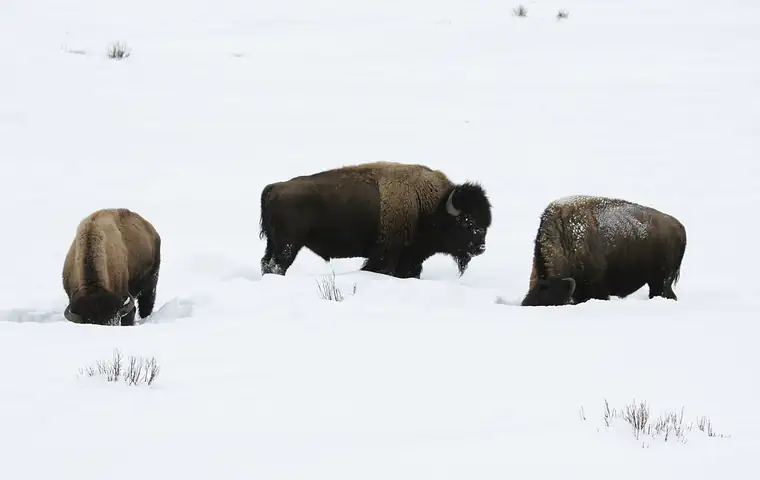
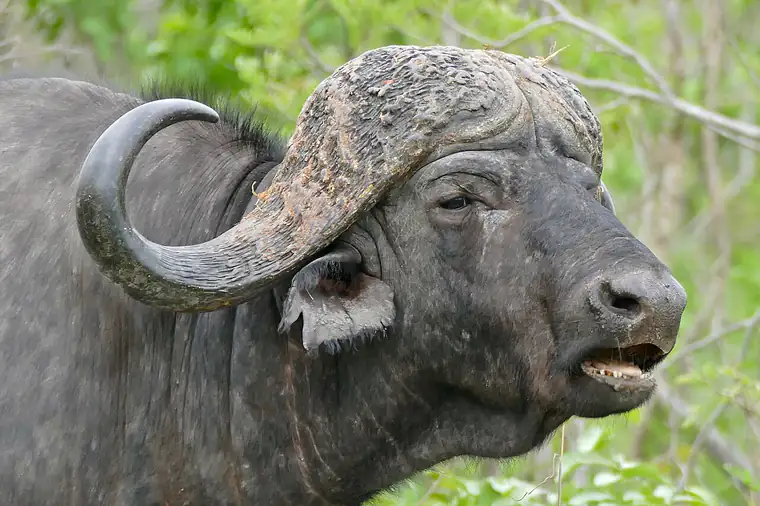
Are bison and buffalo the same animal?
No. Bison (genus Bison) are native to North America and Europe. True buffalo, cape buffalo (Syncerus caffer) and water buffalo (Bubalus bubalis), are native to Africa and Asia respectively. They are different genera within the same family (Bovidae). They cannot interbreed and have never shared a range in the wild. Americans began calling bison 'buffalo' in the 17th century, roughly two centuries before the genus Bison was named, so the word is older than the classification that makes it imprecise rather than a mistake against it.
Why do Americans call bison buffalo?
When French and English traders arrived in North America in the 1600s, they applied the word 'buffalo' (derived from Portuguese/Latin words for African and Asian bovids) to the unfamiliar large animals they found. By the time taxonomists formally classified the animal as Bison bison in 1827, 'buffalo' was already entrenched in place names, songs, and everyday speech across the continent. The scientific name is 'bison'; the popular American name is 'buffalo'; both refer to the same North American animal.
Which is bigger, bison or buffalo?
It depends on which buffalo. Wild water buffalo bulls can reach 1,200 kg, making them the heaviest of the three. American bison bulls typically weigh 700-900 kg; exceptional animals reach 1,000 kg. Cape buffalo bulls average 500-900 kg. On shoulder height, wild water buffalo (up to 190 cm) and American bison (up to 200 cm including the hump) are comparable. Cape buffalo stand up to 150 cm at the shoulder. See the full size comparison table for detailed measurements.
Which is more dangerous, bison or cape buffalo?
Both are dangerous if provoked or surprised. Cape buffalo have a stronger reputation for aggression toward humans when wounded or cornered; they are included in Africa's 'Big Five' dangerous game for this reason. American bison injure more tourists annually at Yellowstone than bears or wolves, largely because visitors underestimate their speed and temperament. The practical danger depends on context: never approach either species on foot within safe distances.
Can bison and buffalo interbreed?
Bison cannot interbreed with cape buffalo or water buffalo: they are too distantly related (last common ancestor approximately 5-9 million years ago). However, bison CAN interbreed with domestic cattle (Bos taurus), producing 'beefalo' or 'cattalo' hybrids, because bison and cattle share the same chromosome count (60) and diverged only 1-2 million years ago. Most bison alive today carry some cattle ancestry from historical hybridisation experiments in the late 19th and early 20th centuries.
How fast can a bison run?
American bison can reach speeds of 55-60 km/h (34-37 mph), faster than the average human can sprint and faster than most horses over short distances. Cape buffalo are similarly fast at 55-60 km/h. Water buffalo are somewhat slower at 40-48 km/h. Bison can also jump approximately 1.8 metres (6 feet) from a standing position. At Yellowstone, 'safe' bison viewing is defined by the NPS as a minimum of 25 yards (23 metres). Even this distance can be closed in seconds.
How many bison are left?
Approximately 430,000-530,000 total bison in North America. However, most of these (roughly 400,000) are on commercial ranches managed for meat production. Only 20,000-30,000 bison are in dedicated conservation herds managed primarily for ecological and genetic purposes. The IUCN lists the American bison as Near Threatened (2017 assessment), noting that no truly free-ranging, ecologically functional wild population currently exists at a scale sufficient for long-term self-sufficiency.
Are bison endangered?
The American bison is listed as Near Threatened by the IUCN, not Endangered or Critically Endangered, but close to qualifying for a threatened category. The European wisent is also Near Threatened. Wild water buffalo are Endangered. Cape buffalo are Near Threatened, with a declining trend. 'Near Threatened' for bison means the species has recovered from near-extinction but remains conservation-dependent; no genuinely wild, free-roaming population of adequate size currently exists.
What is a group of bison called?
A group of bison is called a herd or a gang. Historically, Plains bison formed enormous herds numbered in the millions; observers in the 19th century described herds that took three days to pass a given point. Modern conservation herds are much smaller: typically a few hundred to a few thousand animals. The largest single managed population is Yellowstone National Park at approximately 5,000 bison.
What is a baby bison called?
A baby bison is called a calf. Bison calves are born with a distinctive red-orange coat that earns them the nickname 'red dogs'. This colouring fades to the typical brown-grey adult colour within a few months. Calves are born April through June, weigh 14-20 kg at birth, and can stand and walk within hours. The red-orange colour serves as protective camouflage in the spring grassland environment, and distinguishes calves visually from adults so the herd can protect them.
How long do bison live?
Wild bison typically live 15-20 years; some cows survive into their early 20s. Cape buffalo have a similar wild lifespan of 15-25 years. Wild water buffalo live approximately 20-25 years. In captive settings, all three species may live somewhat longer with veterinary care: bison up to 25 years, cape buffalo up to 29 years, domestic water buffalo up to 30 years.
Do bison migrate?
Historically yes, and significantly so. Bison undertook seasonal movements of hundreds of kilometres in response to grass availability, weather, and calving requirements. These migrations structured the entire ecosystem of the Great Plains. In modern conservation settings, bison within fenced parks make limited seasonal movements but cannot undertake the long-distance migrations of their ancestors. Restoration of bison migration corridors is one of the stated goals of large-scale prairie conservation projects such as the American Prairie Reserve in Montana.
What do bison eat?
Bison are grazers. Their diet is primarily grasses, with sedges, forbs, and shrubs as supplements. They are well-adapted to the tough, fibrous grasses of the Great Plains and can survive on lower-quality forage than domestic cattle. In winter, bison use their massive heads to sweep snow aside and find grass beneath; the hump musculature is partly an adaptation for this head-sweeping motion. Cape buffalo are also primarily grazers. Water buffalo favour tall wetland grasses, sedges, and aquatic vegetation.
What is a beefalo?
A beefalo is a hybrid between American bison and domestic cattle. The American Beefalo Association defines 'full blood' beefalo as 3/8 bison and 5/8 domestic bovine. Beefalo are fully fertile (unlike many other bovid hybrids), commercially recognised as a livestock category in the US, and marketed for leaner, higher-protein meat compared to beef. The existence of beefalo is also why most bison alive today carry some cattle ancestry from historical crossbreeding experiments in the late 19th and early 20th centuries.
Is bison meat healthy?
Bison meat is notably leaner than beef: typical bison has 2-3% fat vs 5-20% fat in beef cattle breeds. It is higher in protein per 100g and has a higher omega-3 to omega-6 fatty acid ratio than grain-fed beef. The flavour is described as slightly sweeter and less 'gamey' than venison or elk. Bison meat is commercially available in the US and Canada at specialty butchers, national chains including Whole Foods, and directly from bison ranches and tribal operations.
What is the difference between a bison and a wisent?
The American bison (Bison bison) and the European wisent or European bison (Bison bonasus) are the two living species in genus Bison. Both have the characteristic hump and shaggy forequarters. European wisent are slightly taller and lighter in build than American plains bison, with a less pronounced hump and a lighter coat on the shoulders. European wisent became extinct in the wild in 1927 (last wild individual shot in the Bialowieza Forest) and were reintroduced from zoo populations. About 9,760 free-ranging wisent now live across Europe, out of roughly 12,200 worldwide (European Bison Pedigree Book, end 2024).
Where are bison native to?
American bison are native to North America: historically from Alaska and northern Canada south to northern Mexico, and from the Rocky Mountains east to the Atlantic seaboard (with lower densities in the east). European wisent are native to Europe. Bison evolved in Asia and migrated to North America and Europe during the Pleistocene via land bridges. Bison are not native to Africa, South America, or Australia; any bison in those regions are introduced or feral.
Are cape buffalo the most dangerous animal in Africa?
Cape buffalo have a reputation as 'the most dangerous animal in Africa' in hunting literature, primarily because wounded animals double back to ambush pursuers. The empirical reality is more nuanced: hippopotamuses are thought to kill more humans annually than cape buffalo, and mosquitoes kill far more through malaria transmission. 'Most dangerous' depends heavily on how you measure it and in what context. What is accurate: cape buffalo are unpredictable, strong, fast, and capable of killing adult lions; they are genuinely not to be underestimated.
Can you ride a water buffalo?
Yes, domestic water buffalo are ridden in South and Southeast Asia, though this is less common than using them for ploughing and hauling. In some areas of Vietnam, Cambodia, and the Philippines, children ride water buffalo while herding them. Water buffalo are not ridden with saddles in the way horses are; riders typically sit on the buffalo's back or neck without equipment. Working domestic water buffalo are generally docile toward people they know, though all large bovids can be dangerous and should be approached with caution.
What is the plural of bison?
The plural of bison is bison; the word does not change. 'One bison, three bison, a herd of bison.' This is consistent with other wildlife collective terms in English (deer, sheep, moose). The plural 'buffaloes' or 'buffalo' (both are acceptable) applies to true buffalo species. You will occasionally see 'bisons' in informal or non-native English writing; it is not standard usage.